
Dustin T. Duncan
About Dr. Duncan
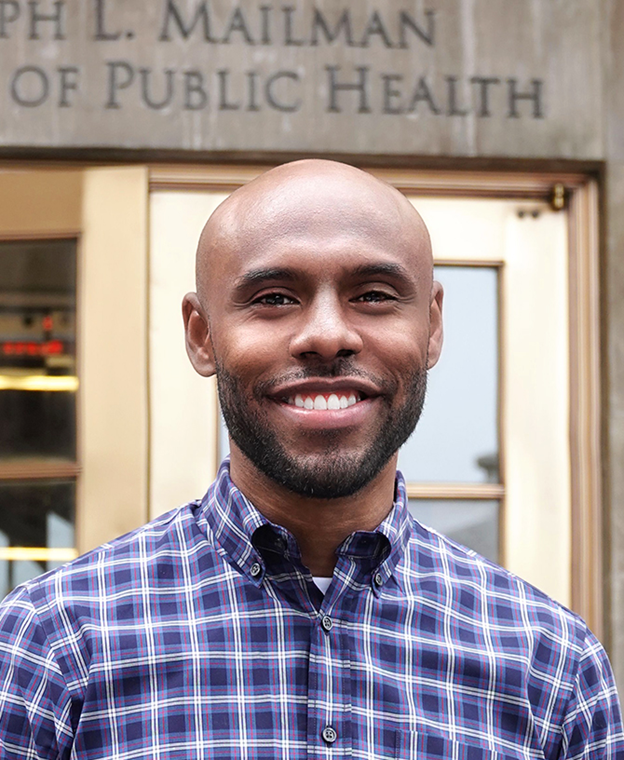
Dr. Dustin T. Duncan is an internationally recognized academic leader and equity strategist. He creates and leads initiatives to rearchitect research systems, faculty development, and university design, operationalizing justice-centered higher education scholarship within academic institutions. His work reshapes organizational structure, power distribution, and production infrastructure for greater equity-centered outcomes. He is widely regarded transformative leader at the intersection of public health, equity, and higher education strategy. Click here to access Dr. Duncan’s CV.
His frameworks include the Health Equity Research Production Model, a redesign of research and governance infrastructures and incentive systems to enable equitable knowledge production at scale; The Step-Up Mentorship Model, which combines intentional sponsorship, structured skill-building, and progressive leadership opportunities to accelerate the success and visibility of early-career scholars, particularly those from historically underrepresented backgrounds; and writing accountability strategies, currently being instituted throughout Columbia University in collaboration with the Office of the Vice Provost for Faculty Advancement.
Author of several books and more than 300 other publications, Dr. Duncan is Associate Dean for Health Equity Research and Professor of Epidemiology at Columbia University, a social epidemiologist with a specialization in spatial, trauma-informed, and mobility-based approaches to health equity.
He is the founder of the Dustin Duncan Research Foundation, which provides philanthropic support to advance health equity research, leadership development, and community partnerships. Fluent in Swahili, Dr. Duncan also advances purpose-driven research and global health partnerships and equity across East Africa.
A National Institutes of Health fellow at Morehouse College in his early 20s, Dr. Duncan entered Harvard University at age 21, completed postdoctoral training at Harvard and the University of Oxford, was appointed professor at New York University before the age of 30, and earned tenure at Columbia before 40. He was promoted to the rank of Full Professor at age 40, becoming the first Black male tenured full professor in his department. He is currently engaged in legal systems training to further deepen his understanding of governance and institutional accountability.
Dr. Duncan’s long-term vision is for universities to be globally connected, structurally sound, and designed to cultivate both excellence and belonging at scale.
“The next era of higher education will be defined by our courage to align knowledge with justice”
– Dr. Duncan
Thought Leader & Innovative Researcher
Dr. Duncan is a sought-after global thought leader and innovative researcher. His pioneering research broadly seeks to understand how social and contextual factors influence population health. Dr. Duncan’s intersectional and health equity-based research focuses on gay, bisexual, and other sexually minoritized men and transgender people of color across the African diaspora including in the U.S., Caribbean, and Africa.
His work appears in leading public health, epidemiology, medical, geography, criminology, demography, and psychology journals. Working in collaboration with scholars across the world, he has written more than 200 high-impact scholarly articles and three books. His research has appeared in major media outlets, including U.S. News & World Report, The Washington Post, The New York Times, and CNN. His recent work is funded by the National Institutes of Health, the Centers for Disease Control and Prevention, the HIV Prevention Trials Network, the Robert Wood Johnson Foundation, the Verizon Foundation, and the Aetna Foundation.
Key research project information can be found here:
Dustin T. Duncan, ScD – Google Scholar
Dustin Duncan, ScD | Columbia University Mailman School of Public Health
Award-Winning Leader & Philanthropist
Dr. Duncan is an award-winning leader who has received several scientific contribution, mentoring, and leadership awards, including from the National Academy of Medicine (NAM), the Harvard University T.H. Chan School of Public Health (HSPH), and the Interdisciplinary Association for Population Health Science (IAPHS). In 2020, he proudly received the Mentor of the Year Award from Columbia University Irving Medical Center’s Irving Institute for Clinical and Translational Research.
Dr. Duncan currently serves on the Council for Black Health. At Columbia, Dr. Duncan directs Columbia’s Spatial Epidemiology Lab as well as co-directs the epidemiology department’s Social and Spatial Epidemiology Unit and co-directs the Health Equity Core in the HIV Center for Clinical and Behavioral Studies.
What reviewers are saying about the research and editorial works of Dr. Duncan
"The COVID-19 pandemic showed, yet again, that the consequences of pandemics emerge from far more than the pathogen itself. They emerge from the social conditions that set the stage for who becomes sick, who lives, and who dies. This book offers a comprehensive account of the social forces that created the COVID-19 pandemic and points to lessons we would be wise to learn if we are to mitigate the next pandemic."
~ Sandro Galea, MD, DrPH, Dean and Robert A. Knox Professor, School of Public Health, Boston University
"The methodological insights and specific research findings displayed here signal an important advance in epidemiology. This book summarizes much of the recent progress that has been made in studies that use aggregate or area-wide measurements. Overall, this book has much to offer. The authors themselves are clearly aware of the complexities, unsolved problems, and numerous challenges that confront anyone who wants to assess quantitatively the impact of social and geographic units on health." --American Journal of Epidemiology "Advances the debate over the theory and methodology of the study of neighborhoods and health to the center stage of epidemiology, public health, and health policy."
~ JAMA
"The distribution and control of disease in human populations has always been profoundly and inextricably social. As these authors skillfully and exhaustively demonstrate, the COVID-19 pandemic serves as a paradigmatic case study of the social determinants of exposure, infection, and disease. Race, gender, class, and power all play starring roles in this terrible saga, along with work, housing, policing and trust. This book provides a comprehensive account of how to understand mass disease in terms of a society out of joint."
~ Jay S. Kaufman, PhD, Professor, School of Population and Global Health, McGill University